Refuzniks
Refuzniks are the Israeli people who are unwilling to serve in the army. For different reasons they reject what it seems to be a compulsory stage in a militarized society. From childhood to adolescence, schools and institutes, invite soldiers to their classrooms to explain the role and importance of the army. Almost in any job and at each university, Israeli are asked what they did in the army.
In fact, Israel has the world record for expenditure on armaments per capita: US.$ 1429. Tsahal has 186.500 soldiers and may mobilize 445.000 reservists. Nowadays, half of Israelis beggins military service at 18 years old (3 years for men, 2 years for women). However, it can be avoided if you may present any physical or mental problem. For Israeli Arabs (18% of the population) and the Haredim Jews (who make religious studies), the military service is not compulsory.
Many of the refuzniks are pacifists. In this case they will have to go to a committee that will decide whether the person has or has not the right to avoid doing the military service. Others choose to say clearly that they are against the occupation of Palestinian territories. The punishment for these people is the military prison. The penalty can vary from 2 months to 2 years. There are also people who avoid the military service for personal reasons (studies, work, family...) The movement of Refuzniks is acquiring importance although it is not well accepted in the country. This serie of portraits aims to show a hidden part of Israel.
My first trip to Israel/Palestine was in October 1993. I visited Gaza and the West Bank and discovered a terrible contrast between the refugee camps and the beautiful districts of Tel Aviv. From 2008 onwards, I worked there regularly. In particular to produce a series of portraits, following and interviewing those who refuse to serve in the army in Israel. The book Refuzniks is published in 2017 by Libertalia and supported by Amnesty International. Since 2022, I have been working with a group of sociologists (CNRS ANR CHOICE/CENS Université de Nantes). I accompany them into the field to document certain aspects of Israeli society, in particular the daily lives of those who oppose their government's. colonial policy. In May 2023, I resume my work on the Refuzniks, which will continue after October 7th until July 2024. The book Nous refusons (We refuse), is published in April 2025 by Libertalia, with a foreword by the Israeli film-maker Eyal Sivan, completes the first opus of 2017 by bringing together personal accounts, portraits and contextual photographs of the historic turning-point of October 7th and the Israeli offensive on Gaza.

Omri, 18 : «It all started with an awareness about a very simple thing: I am against taking a life. I quickly realized that I could not be part of a violent structure like the army. At home, we did not talk about politics, I did not even know what the occupation of the Palestinian territories was. When I went to the West Bank, it was like an electroshock. At checkpoints, at 3 am, we can see 8,000 people waiting to go through a very small door. There are elderly people, pregnant women and patients. Some fall from exhaustion. I spent 67 days in jail.» Tel Aviv 2016.

Michael Ofer Ziv, 28 in 2024, programmer, Tel Aviv. « I was in a war room. We bombed a building in the north of Gaza, and the next thing I knew, only 50% of the civilian population had fled. They weren't necessarily specifically in that building, but there may have been some people left. The army also bombed places where we had told people to go. What happens when you bomb a place where people have taken refuge is that there are even more civilians there. When I was released from my military obligations a few weeks later, three hostages were shot dead by the Israeli army. My first thought was that it was devastating to hear that. My second thought was that it had to happen. I wasn't surprised. We do everything in our power to ensure that something like this can happen. That's how the army operates. I decided I wasn't going back. »

Or, 19: “Because I grew up in a very Zionist Israeli family, when I was a child I was certain that I'd serve in a combat unit. But when I was at a demonstration against the wall in the West Bank, the Israeli army fired at us. I realised that day that I wouldn't do my military service. I'm going to go to prison so my family understands.” Tel Aviv, 2009.
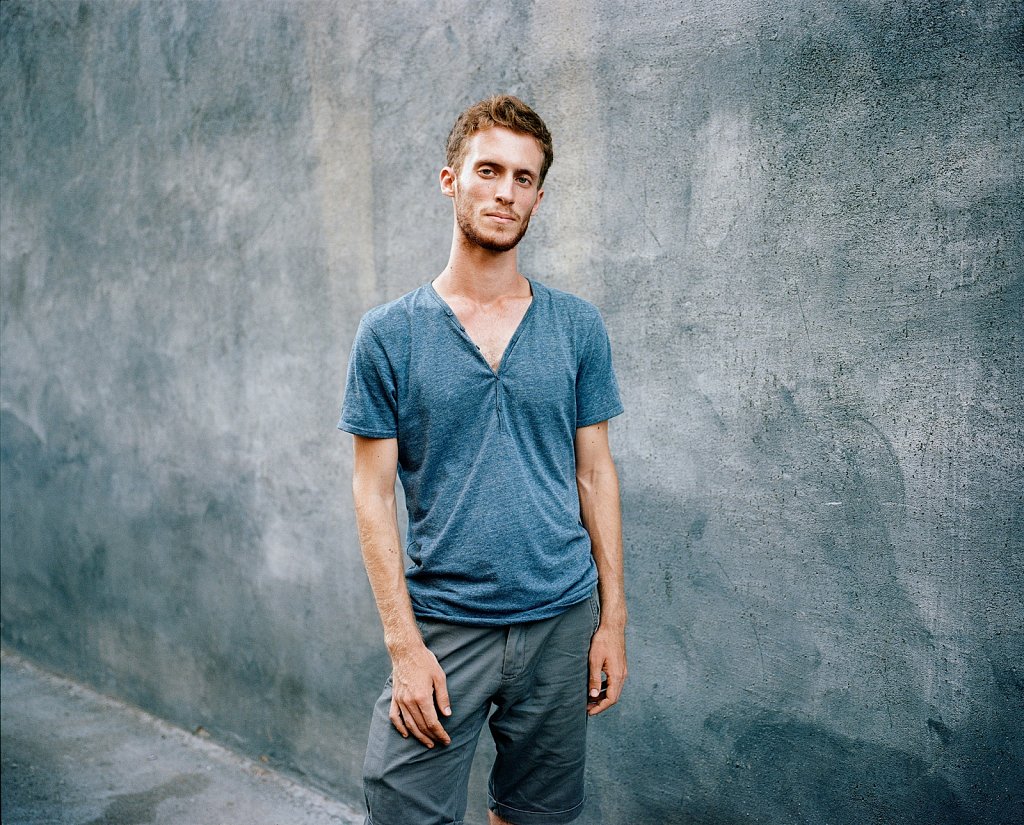
Yaron 22, postman : «I was in a military high school. I was supposed to become a high ranking officer. on the Internet, I came across an interview with a politician who said that Arabs and Jews could cooperate. After that, everything has changed for me. After a year and a half of service, I spent forty days in prison.» Tel Aviv 2016
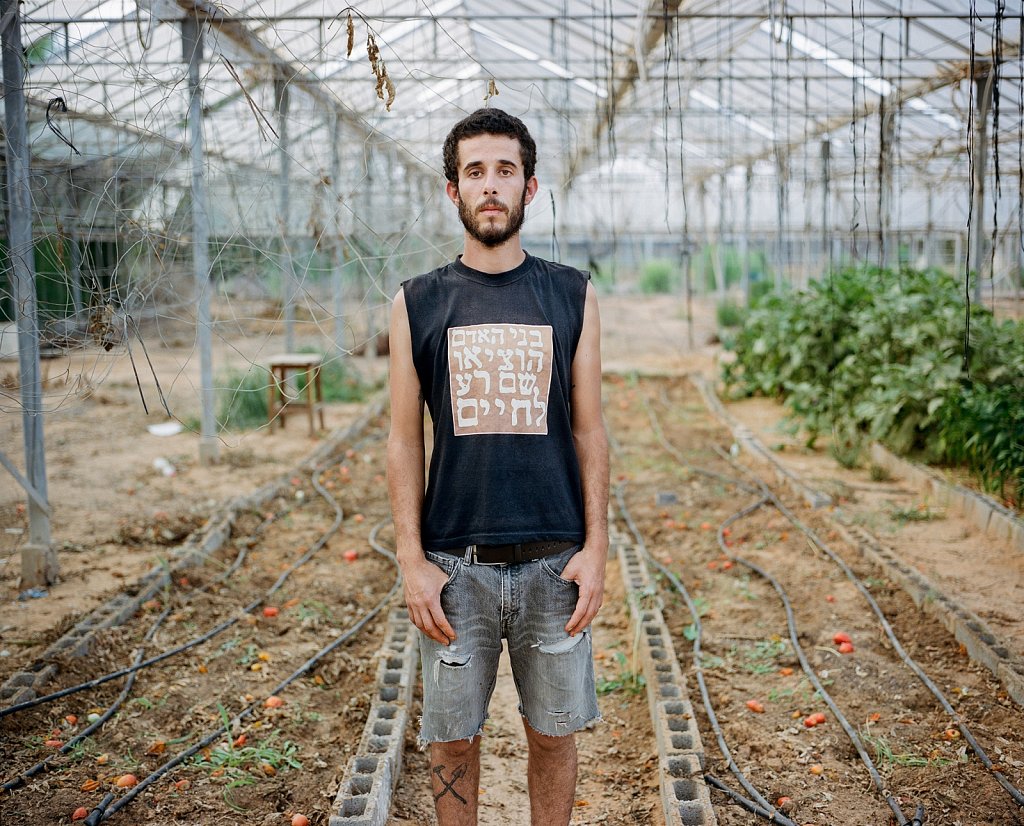
Ben, 27, video club assistant: “My father spent 40 days in jail for not wanting to serve in the army in Gaza. When it was my turn to go, I told the officer in charge about my mental problems, that I didn’t want to carry a weapon and that if I was forced to carry one, I would use it against my superiors. It was one of the most important decisions of my life. When I see all the young people who die for the Zionist cause I can only be happy with my decision. I'd like to feel compassion for these soldiers but, honestly, I can't: when they pull the trigger and shoot at civilians that's unforgivable.” Tel Aviv 2014.

Tair, 19 : «In this society, it is obvious that everyone must do the army, regardless of what you think or who you are. The government, the soldiers themselves, the defense ministry, everybody says, «We have no choice.» Israelis manage to convince themselves that there is no alternative to war. My idea was to break this prejudice. Regarding the checkpoints, the argument is the same: «We have no choice, they stab us in the street.» This is part of the general problem of this country, everything is connected to fear.» Tel Aviv 2016.

Yuval Green, 26 in 2024, student, Jerusalem. « ‘Before 7 October, after a lot of thought, even though I still thought we needed our army for our country to exist, I had decided not to do my reserve service any more. On the 7th, I heard all the horrible things that were happening. I changed my mind. So I went. In the early days, we were in the kibbutz near the border with Gaza that had been attacked. We were there to eliminate the last remaining terrorists. And then we entered Gaza. This posed moral problems for me. I was wondering again whether I shouldn't leave the army. In Gaza, the worst thing for me was the level of destruction. Once we'd spent time in a house, they systematically destroyed it. After changing houses several times and witnessing several destructions, we were ordered to set fire to the house we had to leave. I thought that was unfair. I asked why. I wasn't satisfied with the answer. I asked to leave the unit. I wouldn't go back.»

Haggai, 26, journalist: “When I was 16 I had a teacher who for the first time spoke to us about the conflict in a different way. That same year I took part in a peace convoy to the West Bank to help rebuild Palestinian homes that had been destroyed by the army. In 2001, when we decided to go to jail to protest against the occupation, there were 25 of us. A big trial took place. Witnesses appeared on television. In the law faculty this trial has become an important case, both from a political and philosophical point of view. The army wanted to make an example to scare others, I was sentenced to two years in prison.” Tel Aviv 2009.

Tamar, aged 20: “I’m a pacifist. In 2008 I chose to go to jail in order to explain that it's possible to question the taboo of military service. The most important thing for me was that people could hear a different voice. I spent three months in prison. For the last month I was in solitary because I didn't want to wear the uniform. As for what's happening now, I think it's even more important to refuse to go into the army. The hate and intolerance shown towards these kinds of decisions are even stronger today than back then. Nationalism and the Right's propaganda have made people lose all hope. My generation has grown up without any contact with Palestinian society. So hates flourishes more easily.” Tel Aviv 2014.

Tal Sela, 33, teacher: “At the age of 19 I was posted to an elite unit. This specialism required you to take lessons, and I knew straight away that I was going to stay [in the army] a year-and-a-half longer than normal. In 1997 there was a raid in Lebanon. On September 5th, 12 Israeli soldiers were killed by explosives. The army sent my unit to retrieve the bodies. I remain traumatized by the horror of it. Now, I no longer want to be a reservist. I’m involved in the Combatants for Peace movement.” Tel Aviv, 2009.

Naomi, 20, student: “I didn’t do my military service because I’m against the occupation and against the militarization of Israeli society. It's not just the Palestinians who suffer from the militarization of our society. We have one of the biggest armies in the world even though we're a very small country. The money that's spent on defence is not invested elsewhere, in education for example. It was a problem when I wanted to look for job. I was going to work in a bookshop, but when the employers saw that I hadn’t done military service, they changed their minds.” Tel Aviv 2009.

Aiden 19 : «I decided I would not go to the army when I saw the video of my friend Taïr Kaminer Kaminer. I wanted to do something brave and supportive. I thought that could have a positive effect on this cause that a transgender went to a man’s prison.» Tel Aviv 2016.

Avner, 32, historian: “ I grew up in a kibbutz, in a left-wing Zionist family. All the men in my family are in the army. At the age of 18 I joined up full of confidence, I thought we were the good guys, even if sometimes we made mistakes. But when I discovered the way the Palestinians lived, I thought it was unacceptable that the army, rather than protecting our country, was defending a colonialist project. Me and other 13 soldiers sent a letter explaining that we didn't want to be reservists.” Jerusalem, 2009.
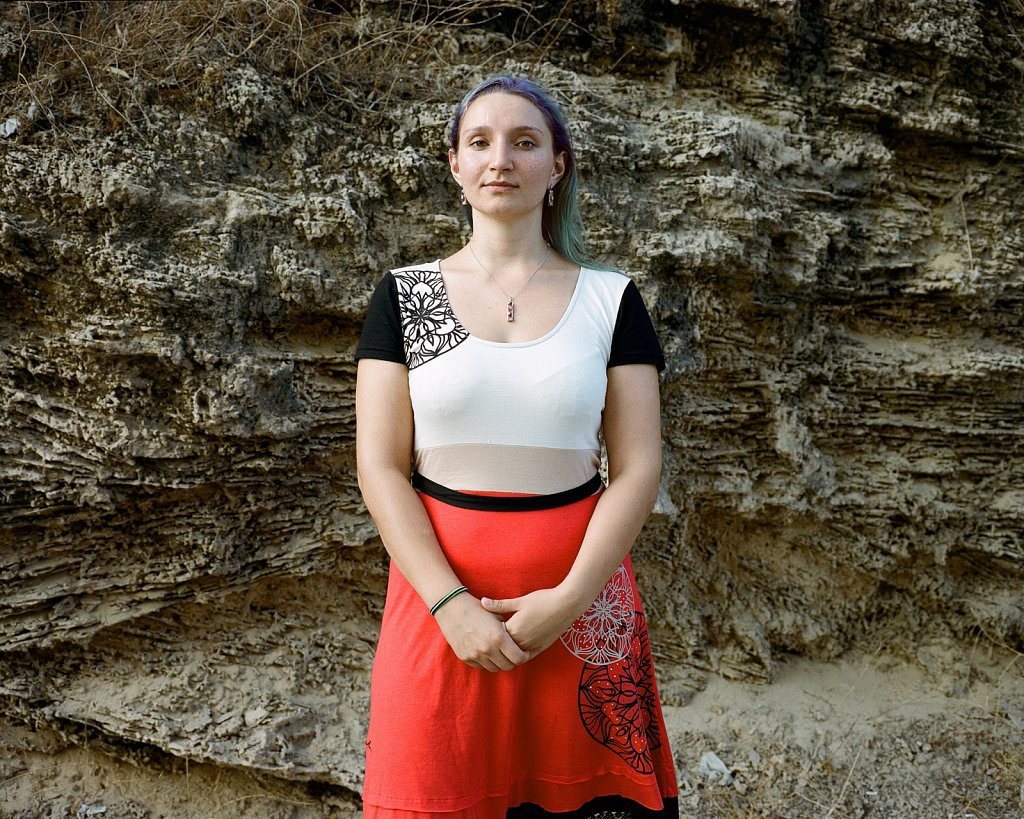
Alona 24, student :«I was born in Ukraine and arrived in Israel in 2002. I got up every day at 5 am, went to the army and stayed until 5 pm. And I worked almost every day in a cafe until one or two in the morning. I lived with my aunt. But I did not have enough money to help him with the rent. I felt like I was a burden to her. Once I slept in the street. After this episode, I decided that I would not continue my military service.» Tel Aviv 2016.

Gilad 23, student : «The first time I thought I would not want to be in the army, I had to be ten years old. The idea of sleeping with other men, taking showers with them terrified me. Today my job is to go to the schools of the poorest neighborhoods to talk to students about militarism in Israel.» Tel Aviv 2016.
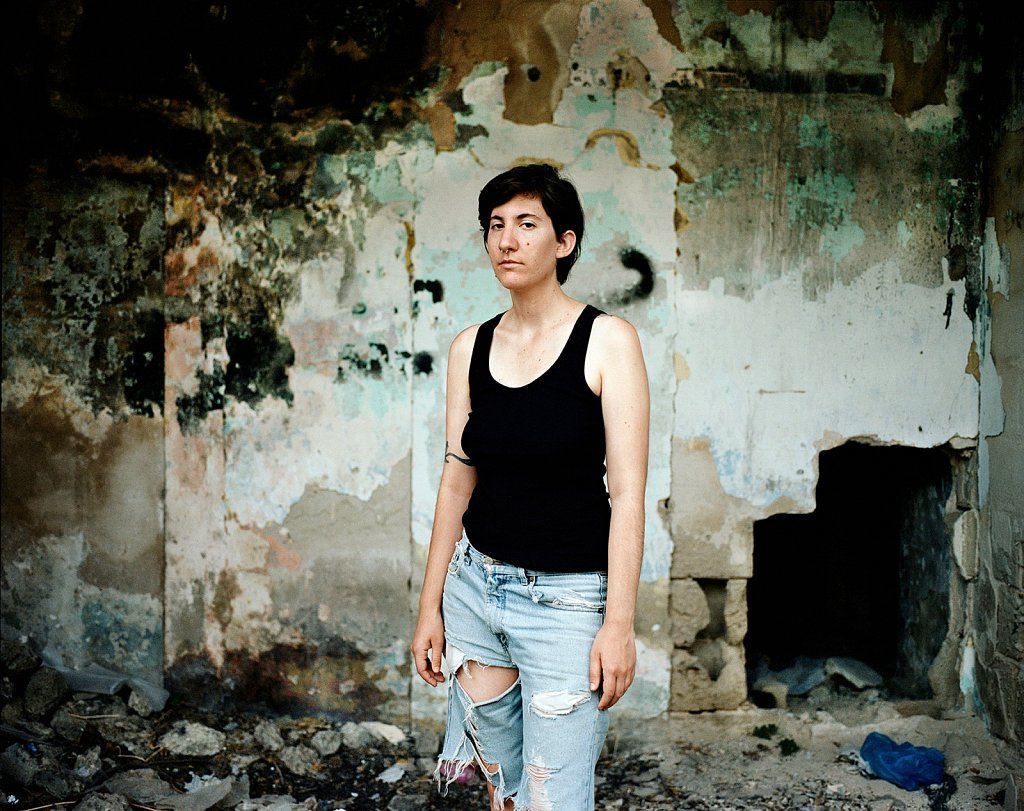
Raz, 26, filmmaker : « When I was 15 I knew nothing about the Palestinians. I lived in a kind of bubble. But when I went into the territories for the first time I saw very clearly that the occupation didn’t exist for security reasons. I felt strongly that we’d been lied to. In 2008 seven of us refused to join the army. I spent 4 months in jail. I came face to face with the reality of other girls who were in a much more difficult situation than mine both on a family and social level.» Tel Aviv 2016.